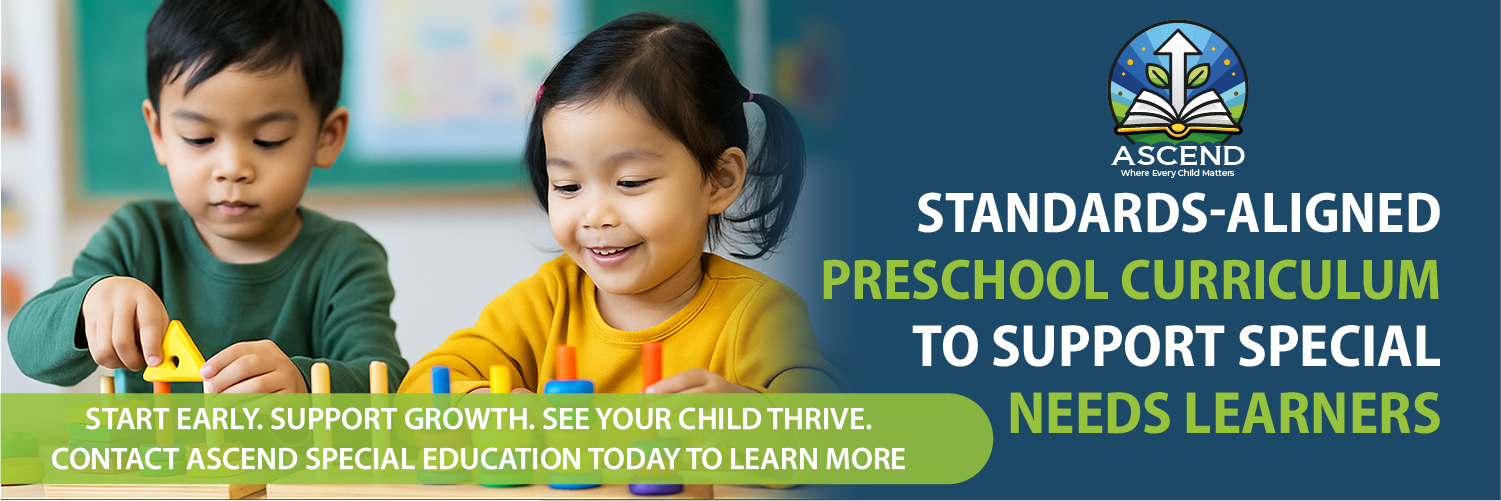
Every child learns differently. At Ascend Special Education in Phnom Penh, Cambodia, we combine an internationally aligned preschool and kindergarten curriculum with individualized teaching, developmental support, and practical learning goals. Our approach helps children with Autism Spectrum Disorder (ASD), ADHD, developmental delays, and other learning differences build the skills they need for school and everyday life.
Rather than expecting every child to follow the same lesson at the same pace, we adapt learning objectives to each child's strengths, developmental stage, and Individualized Education Plan (IEP). Our focus is meaningful progress in communication, early academics, independence, social participation, and readiness for inclusive education.
What Preschool and Kindergarten Curriculum Does Ascend Use?
Ascend draws on Liberty Education's International Preschool Curriculum, a structured early childhood program designed for children approximately 3 to 6 years old. The curriculum is developed with the California Early Learning Frameworks and aligned with internationally recognized early years frameworks, including:
- California Early Learning Frameworks: Developmentally appropriate foundations for early childhood learning.
- UK Early Years Foundation Stage (EYFS): A framework covering early learning, development, and school readiness.
- Singapore Nurturing Early Learners (NEL): A holistic approach to early childhood learning and development.
Liberty Education provides structured learning objectives, teacher guidance, and resources emphasizing phonics, literacy, numeracy, and hands-on activities. At Ascend, these resources provide a curriculum foundation that our special education team can adapt to each child's individual learning plan.
Our approach combines curriculum standards with flexibility. Children work toward meaningful developmental and educational goals without being expected to progress at an identical rate.
How Ascend Personalizes Learning Through Individualized Education Plans (IEPs)
An Individualized Education Plan (IEP) is a written plan describing a child's current abilities, priority learning goals, teaching strategies, and methods for monitoring progress.
At Ascend, the IEP connects curriculum learning objectives with the child's individual developmental needs. Parents, special education teachers, and relevant therapists collaborate to identify achievable goals and appropriate interventions.
Our Individualized Learning Process
- Developmental assessment: We identify each child's strengths and support needs across communication, attention, social development, motor skills, behavior, and early learning.
- Collaborative IEP development: We work with parents to establish clear, measurable goals based on assessment findings and family priorities.
- Adapted teaching: Our educators modify activities, instructions, pacing, and learning materials to make the curriculum accessible and engaging.
- Targeted interventions: Depending on the child's needs, academic learning may be supported by speech therapy, occupational therapy, behavioral therapy, or other individualized strategies.
- Progress monitoring: Our team reviews the child's development, communicates with parents, and adjusts learning goals as skills develop.
Learn more about our developmental assessments and individualized learning support services.
What Do Children Learn at Ascend?
Our preschool and kindergarten learning objectives are adapted to support academic development, communication, self-regulation, and practical independence. The activities chosen depend on each child's abilities, interests, and IEP goals.
1. Early Literacy, Language, and Phonics
Children develop foundational communication and literacy skills through storytelling, picture cards, songs, vocabulary activities, and structured phonics instruction when developmentally appropriate.
Learning goals may include recognizing sounds, identifying letters, understanding simple instructions, building vocabulary, and developing early reading readiness. For children with communication difficulties, lessons may incorporate visual supports and alternative ways to communicate.
2. Early Numeracy and Problem-Solving
Through counting games, matching activities, puzzles, manipulatives, and everyday examples, children explore early mathematical concepts.
Skills may include number recognition, counting objects, sorting, comparing quantities, identifying shapes, recognizing patterns, and solving simple problems. Activities can be broken into smaller steps and repeated as needed.
3. Social Communication and Emotional Development
Learning involves more than academic skills. Children also benefit from opportunities to communicate their needs, participate with others, understand emotions, and develop positive relationships.
Depending on the child's goals, our educators support turn-taking, shared activities, asking for help, understanding routines, managing transitions, and developing emotional regulation. We respect individual communication styles and adapt activities to each child's comfort and abilities.
4. Motor Skills, Sensory Needs, and Independence
Fine motor, gross motor, sensory, and daily living skills can influence a child's ability to participate in learning.
Individualized activities may involve drawing, manipulating classroom materials, movement, hand coordination, dressing routines, organizing belongings, or practicing self-care skills. Sensory accommodations and movement breaks can be included when beneficial.
5. Creativity, Exploration, and STEAM Learning
Art, music, building activities, science exploration, and hands-on projects create opportunities for children to express ideas and develop curiosity.
These experiences can strengthen attention, communication, flexible thinking, coordination, and problem-solving while encouraging enjoyable participation in learning.
6. School Readiness and Classroom Participation
For children preparing to enter or return to general education classrooms, learning goals may also include participating in group activities, following classroom routines, communicating with teachers, managing transitions, and completing age-appropriate learning tasks with increasing independence.
From Curriculum Objectives to Individual IEP Goals: A Practical Example
International preschool curricula describe what children are generally expected to learn. At Ascend, we use these learning objectives as a reference while developing goals appropriate to the individual child.
Example: Early Mathematics
- Curriculum objective: Develop counting and number recognition skills.
- Child's current ability: The child can match small groups of objects but has difficulty connecting quantities to written numerals.
- Example individualized goal: Match quantities of one to three objects with the corresponding numeral cards in four out of five opportunities, with appropriate visual support.
- Teaching approach: Use counting blocks, picture cards, hands-on games, visual prompts, and short structured learning sessions.
- Progress monitoring: Record successful responses and adjust the activities as the child develops greater understanding and independence.
This is an illustrative example, not a fixed goal for every child. Actual IEP objectives are established after assessment and reviewed according to individual progress.
This approach allows children to work toward recognizable educational standards while receiving the adaptations and support they need.
How Special Education and Therapy Support the Curriculum
At Ascend, early academic learning can be coordinated with developmental and therapeutic interventions. This helps ensure that learning goals consider the whole child, rather than focusing only on classroom performance.
Depending on the child's assessed needs, support may include:
- One-on-one special education intervention: Individualized instruction and skill development.
- Speech and language therapy: Support for understanding language, expressing needs, speech development, and functional communication.
- Occupational therapy: Support for motor coordination, sensory processing, and activities of daily living.
- Behavioral and emotional support: Strategies for attention, self-regulation, positive participation, and managing challenging situations.
- Academic learning support: Personalized instruction to strengthen literacy, numeracy, and other foundational skills.
- Parent collaboration: Practical guidance and communication to help families reinforce relevant skills at home.
Our team works to coordinate educational and therapeutic goals so that children can practice useful skills across different activities and settings.
Preparing Children for Inclusive and Mainstream Education
One of Ascend's important goals is to help children develop the skills needed to participate successfully in general education environments whenever appropriate.
School readiness involves more than recognizing letters and numbers. It also includes communication, independence, attention, classroom participation, social interaction, and the ability to access learning with suitable support.
Our educators and therapists work with families to identify readiness goals and support gradual transitions where appropriate. For some children, this may involve increased participation in group activities. For others, it may involve building communication, self-care, or academic foundations before taking the next step.
Every child's pathway is different. We focus on sustainable progress and appropriate inclusion rather than promising a particular timeline or outcome.
How Ascend Monitors Your Child's Progress
Effective individualized education requires ongoing observation and adjustment. A learning plan should change as a child's skills, needs, and priorities change.
At Ascend, progress monitoring is connected to each child's IEP and may include observation notes, skill-development records, work samples, parent feedback, and periodic reviews.
Families are involved in understanding their child's goals and reviewing progress. When appropriate, our team can adapt the frequency of sessions, instructional methods, and intervention priorities to support continued development.
Who Can Benefit From Ascend's Early Learning Support?
Ascend's individualized curriculum approach may benefit preschool and kindergarten children who:
- Have Autism Spectrum Disorder (ASD) or ADHD.
- Experience speech, language, or communication delays.
- Need additional support with early literacy or mathematics.
- Have difficulty with attention, transitions, or classroom routines.
- Need help developing social, emotional, sensory, or daily living skills.
- Are preparing to enter or reintegrate into a mainstream classroom.
- Learn more effectively with adapted teaching and individual attention.
A formal diagnosis is not required to begin a conversation with Ascend. Parents can contact us to discuss their child's development and whether an assessment or individualized learning support may be appropriate.
Frequently Asked Questions About Ascend's Preschool Curriculum
Does Ascend follow an international preschool curriculum?
Yes. Ascend draws on Liberty Education's internationally aligned early childhood curriculum, developed with the California Frameworks and aligned with the UK EYFS and Singapore NEL frameworks. Learning activities are adapted to individual educational goals rather than applied as a fixed program for every child.
Can children with autism or ADHD follow preschool and kindergarten learning objectives?
Yes. Children with autism, ADHD, and other developmental differences can work toward early childhood learning objectives with appropriate adaptations. Their IEP may modify the level of difficulty, teaching method, pace, materials, or support provided.
Is Ascend's curriculum the same as a mainstream preschool program?
Ascend is a specialist education and therapy center. We use early childhood curriculum objectives to guide individualized learning, developmental intervention, and school readiness. The format of each child's program depends on their needs and agreed educational goals.
How does Ascend decide which learning goals are appropriate?
We begin by understanding the child's current abilities through assessment and discussions with parents. Our team then develops an IEP with practical, measurable objectives, drawing on relevant developmental and curriculum expectations.
Can academic instruction be combined with therapy?
Yes. When appropriate, Ascend can coordinate academic intervention with speech, occupational, and behavioral therapy. The combination depends on the child's assessment findings, priorities, and individualized program.
How can parents support the curriculum at home?
Parents can reinforce selected IEP goals through everyday routines, shared reading, counting games, communication activities, and opportunities to practice independence. Ascend works with families to identify manageable strategies suited to their child's development.
Start Your Child's Learning Journey With Ascend
A strong educational foundation starts with understanding the individual child. At Ascend Special Education, we combine internationally informed curriculum objectives, personalized teaching, and collaborative IEP planning to support meaningful learning and development.
Whether your child needs early intervention, additional academic support, or preparation for an inclusive classroom, our team can help you explore appropriate next steps.
Contact Ascend Special Education in Phnom Penh to discuss your child's strengths, needs, and learning goals.
Call or WhatsApp: 092 944 415
Location: #168, Street 156, Toek Laak 2, Phnom Penh, Cambodia
Contact form: Send an inquiry to Ascend Special Education
Ascend Special Education — Where Every Child Matters.